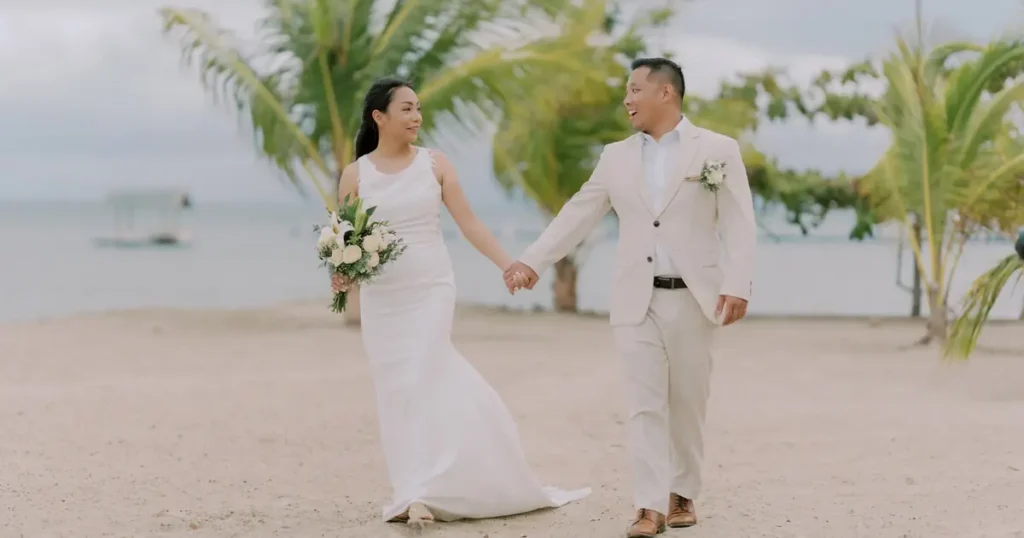
Choosing an El Nido wedding photographer usually starts with a search, and most of what that search returns comes from people who have never watched the light drop behind Cadlao Island at 5:40 in the afternoon. We live here. This guide covers what we have learned photographing weddings in Bacuit Bay — specifically, the parts that affect your pictures, your paperwork, and your day.
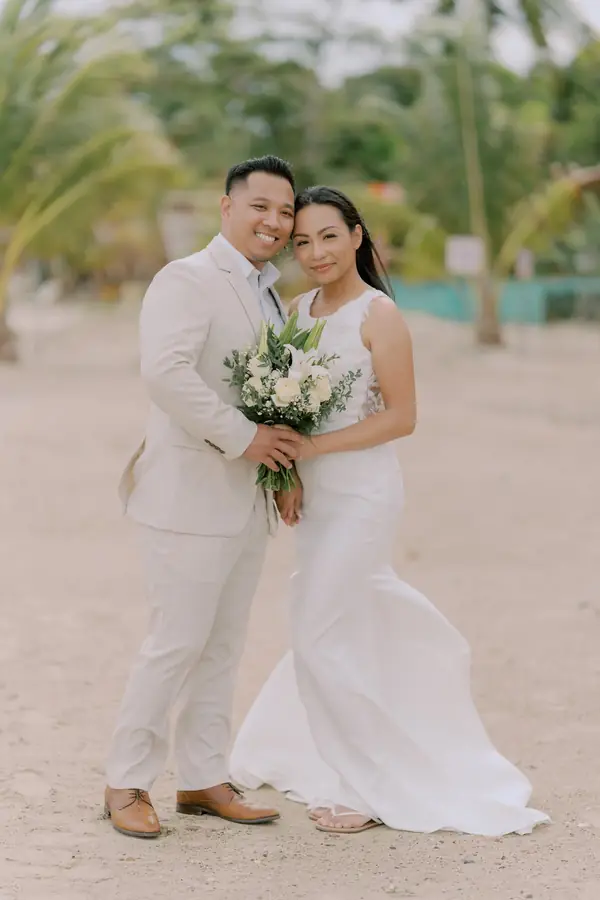
Why couples choose an El Nido wedding photographer
El Nido is limestone, open water, and light that changes character three times between four o’clock and sunset. As a result, it photographs unlike anywhere else in the Philippines. The karst cliffs give you vertical drama that a flat beach simply cannot. Meanwhile, the water shifts from jade to deep blue depending on depth and hour. And because the town stays small, a wedding here still feels private in a way that larger destinations no longer do.
However, it is also genuinely remote, and that cuts both ways. You get fewer crowds in your frames. But you also get fewer suppliers, longer lead times, and logistics you need to plan around rather than assume.
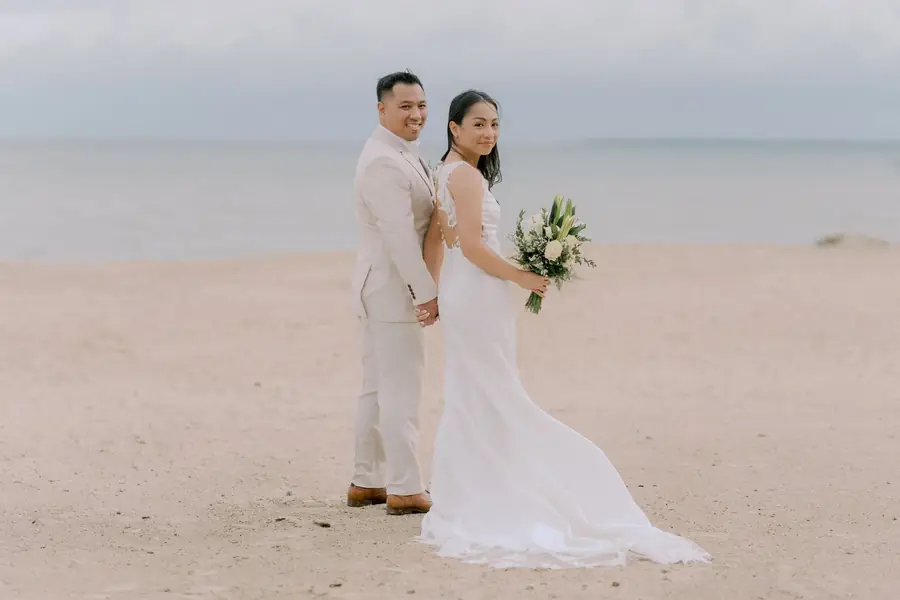
When to book an El Nido wedding photographer
The dry season runs roughly December through May. The rainy season runs June through November, and July is typically the wettest month. If you want to check the long-run averages yourself, PAGASA publishes climatological normals for stations across the country.
If you want the highest probability of clear skies and calm water for an island ceremony, then March, April, and May are the safest bet. They are also the hottest — daytime temperatures can climb past 38°C, which matters a great deal if you are in a full gown at two in the afternoon. For that reason, we usually push the ceremony to late afternoon in those months and build the portrait session around sunset.
December to February is the sweet spot for comfort: dry, cooler, and breezy. Of course, it is also peak season, so resorts book out early and rates sit at their highest.
Finally, June to November is not off the table. Palawan sits largely outside the main typhoon corridor that hits Luzon and the Visayas, although it is not immune — so plan a covered backup location regardless of month. Green-season weddings can be beautiful, because rain here tends to arrive hard and leave fast. In fact, we have shot some of our favorite frames in the twenty minutes after a downpour, when the cliffs are wet and the air is clear.
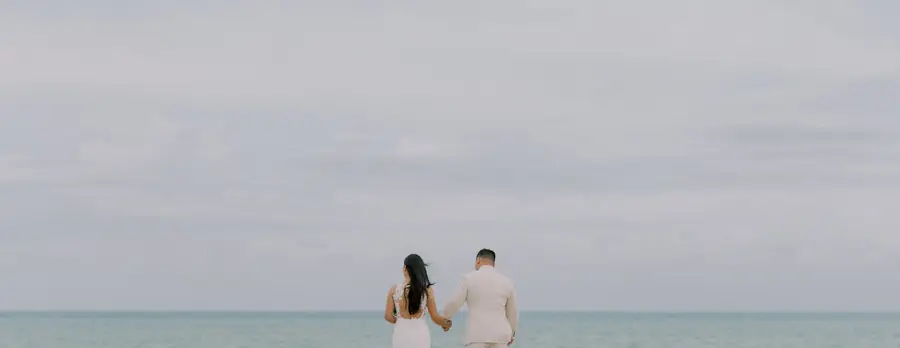
Where El Nido weddings actually happen
There are four broad options, and each has a different photographic character.
Resort beachfronts. These are the simplest logistically. Lio Beach on the north side has a long, wide sand stretch and several properties with event capability. Corong-Corong on the south side faces west, which means the ceremony and the sunset become the same event.
Island ceremonies in Bacuit Bay. These are the most spectacular and also the most demanding. You are moving your entire party by boat, so you deal with tide schedules, a weather call made the morning of, and no realistic way to reschedule mid-day. Still, it is worth it if you want the cliffs directly behind you.
Nacpan and the northern beaches. About an hour of rough road from town. Wide open, far fewer people, and a completely different feel from the bay. Particularly good for smaller groups who do not mind the drive.
Church and civil ceremonies in town, followed by a reception or portrait session elsewhere. This is the most common structure for Filipino couples, and also the most weather-resistant.
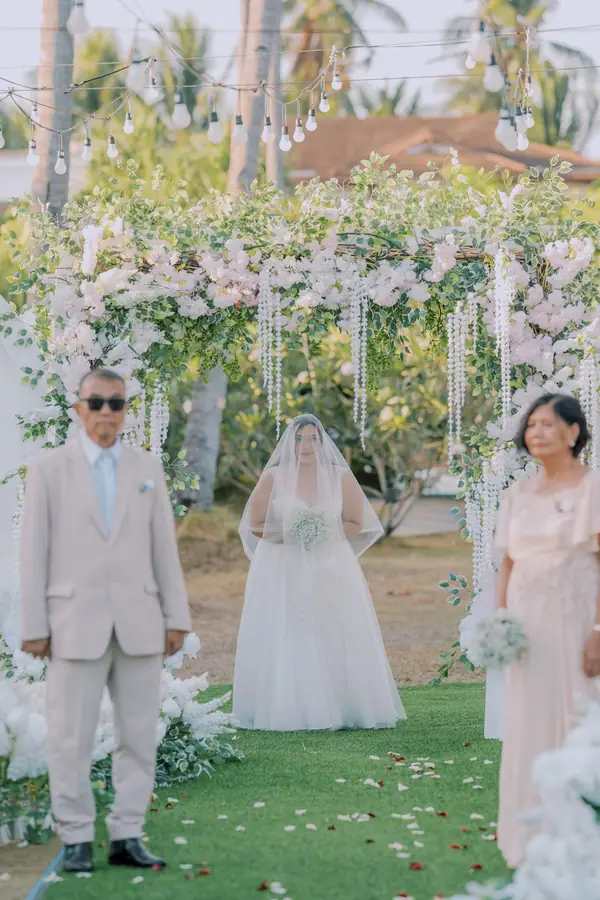
If you are a Filipino couple
The paperwork
You will apply for your marriage license at the Office of the Civil Registrar where either of you resides — not necessarily in El Nido. First, you file. Then a ten-day posting period runs before the registrar can release the license. Once issued, the license stays valid for 120 days anywhere in the Philippines, which is set out in Article 20 of the Family Code. That last part is exactly what makes destination weddings workable, since you can secure the license at home and bring it to Palawan.
If you are having a church wedding, the canonical requirements sit on top of the civil ones — seminar, banns, baptismal and confirmation certificates, and the officiating priest’s own timeline. Therefore, start that conversation six months out, not three.
After the wedding, your officiant registers the marriage with the local civil registrar, and the record eventually reaches the Philippine Statistics Authority. Allow several weeks before a PSA copy becomes available, particularly if you need one for a visa or a name change.
Prenup timing
Most couples we work with do the prenup on a separate trip, or else add a day on either side of the wedding. The second option is more practical and less expensive. Our honest advice: schedule it for the day before the wedding rather than the day after. You will be fresher, and if weather forces a reschedule you still have the wedding day as a buffer.
Guests and logistics
Assume your guests need two travel days on either end. Book their transport as a group if you can, because the vans from Puerto Princesa run on a schedule that does not care about your ceremony time.
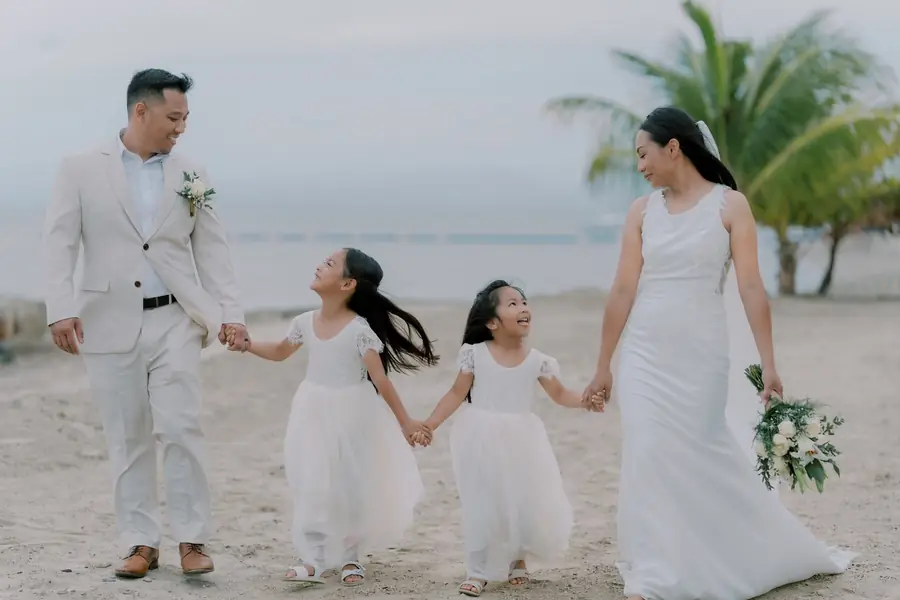
If you are traveling from abroad
The legal requirement people miss
If one or both of you is a foreign national, you need a Certificate of Legal Capacity to Contract Marriage. Your own embassy or consulate in the Philippines issues it — not the Philippine embassy in your home country. Requirements vary by nationality, and some embassies have stopped issuing the certificate entirely and provide an affidavit instead. So check with yours directly and early.
Generally, you will need your birth certificate and, if previously married, a divorce decree or death certificate before the embassy will issue it. After that, the same ten-day posting period at the local civil registrar applies to you.
A practical note: a number of couples handle the legal marriage at home and treat the El Nido ceremony as the celebration. This removes the paperwork risk from a trip you have flown a long way for. Photographically, there is no difference at all.
Getting here
AirSWIFT is the only carrier flying directly into Lio Airport, and the flight takes roughly 75 minutes. Their departure city has changed recently, so check current schedules rather than trusting a guide — including this one — on that particular detail.
Alternatively, fly into Puerto Princesa and drive north, which takes five and a half to six hours by van or bus. It makes for a long day, but a reliable one, and it gives you a fallback if weather cancels the Lio flight.
Above all, plan to arrive at least two full days before the ceremony. Flight disruptions here happen often enough that you do not want your buffer to be zero.
What to look for in an El Nido wedding photographer
There are three questions worth asking anyone you are considering.
Have they shot here, in this month? The light and the tide behave differently in April than in September. Someone who knows Bacuit Bay knows which island falls into shadow by four o’clock.
What happens if it rains? A photographer who has only ever shot El Nido in perfect weather will not have an answer. Someone who works here will.
What are you actually receiving, and when? Number of edited images, whether video is included, delivery format, delivery timeline. Get all of it in writing before you pay a deposit.
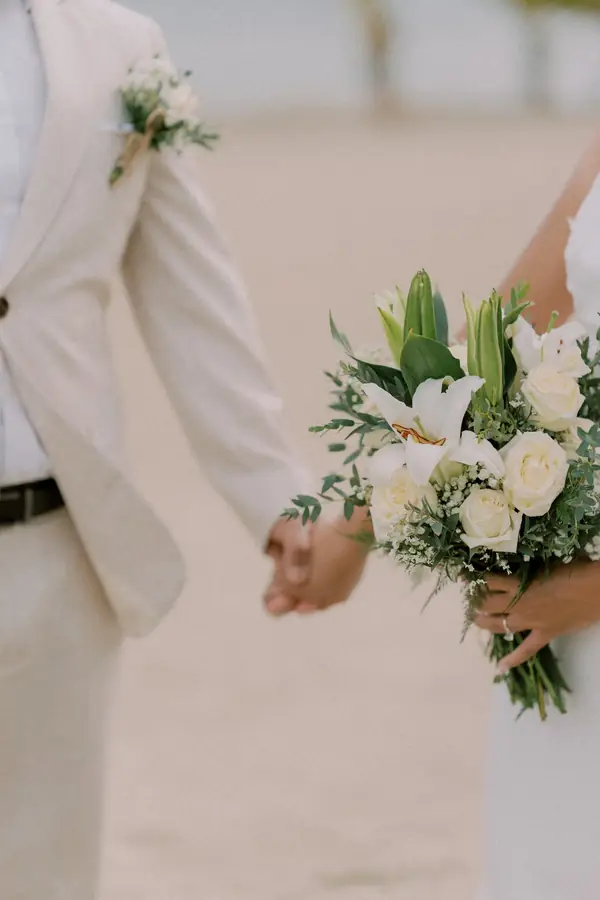
How we work as an El Nido wedding photographer
We quote every commission individually, because coverage hours, your choice of photo or video or both, and travel distance all change the number. You can see the current structure on our pricing page and the package tiers on the homepage.
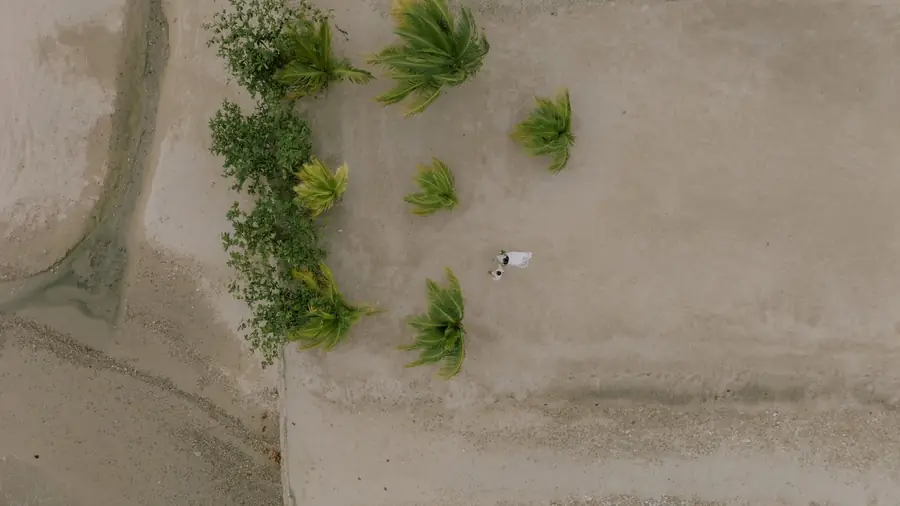
Standard coverage includes signature editing and gallery delivery via Google Drive, typically within one to three weeks depending on scope. We also offer aerial and drone coverage, plus same-day and rush edits as add-ons. Additionally, we travel throughout Luzon, Visayas, and Mindanao and take international commissions, although travel fees apply outside Palawan. Details sit in our travel coverage section.
If you want to see how we handle this landscape, then the El Nido portfolio is the honest answer.
Frequently asked questions
How far in advance should we book an El Nido wedding photographer?
For December through May, book six to twelve months ahead, since peak season dates go early. Green season is more flexible, so three to six months usually works.
Do you shoot island ceremonies in Bacuit Bay?
Yes. These require a weather call on the morning of, and we will tell you honestly if the water is not safe for a boat party.
Can you cover a church ceremony in town and a beach reception?
Yes — multi-location days are standard here, so we plan the timeline around drive and boat times.
What if it rains on our wedding day?
We shoot anyway. Rain in El Nido usually passes within the hour, and the light afterwards is exceptional. Additionally, we will have scouted a covered option in advance.
Do you travel outside Palawan?
Yes, nationwide and internationally. However, travel fees apply outside Palawan.
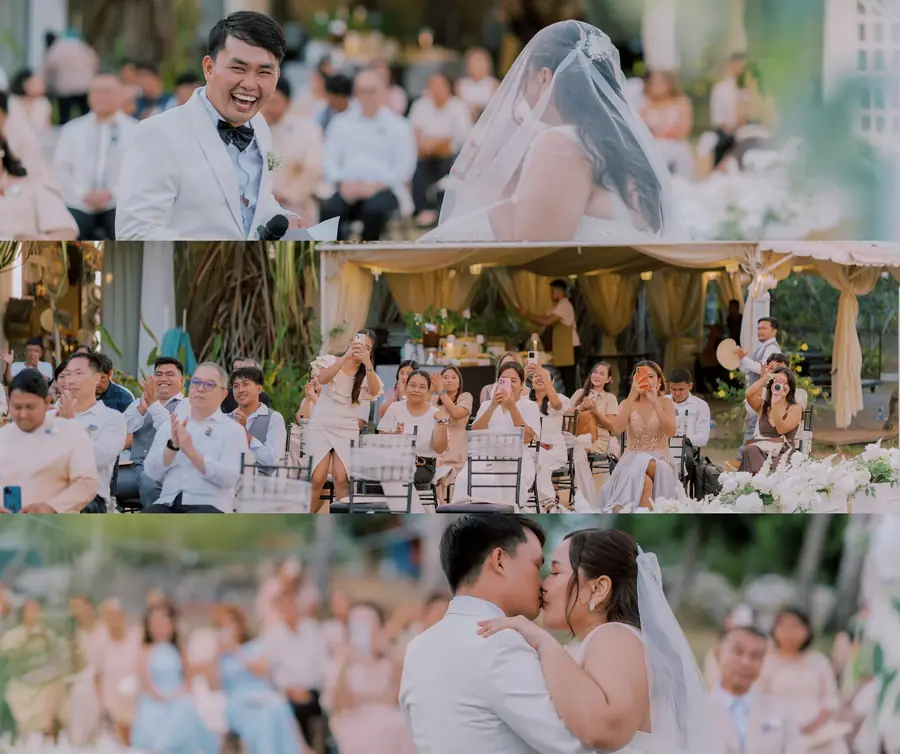
Planning an El Nido wedding? Send us your date — we respond within 24 hours, always personally.